
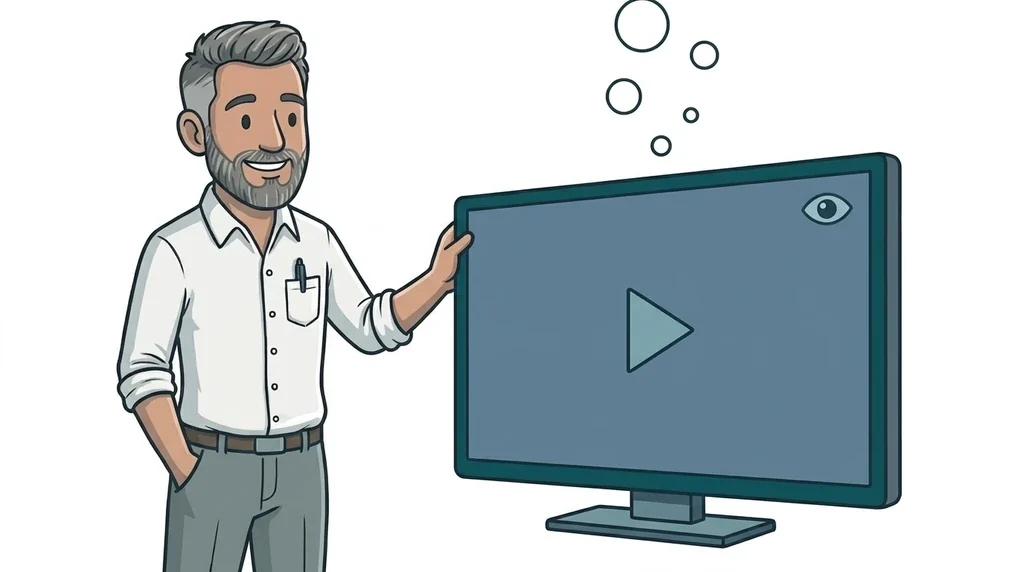
YouTube has started adding estimated TV co-views to the public view count on video watch pages. From November 2026, when people watch together on a TV, that playback can count as more than one public view. Mobile and desktop views still count as one each. Partner Program earnings and eligibility stay on the old rules, so a bigger public number does not mean more money on its own.
If you run a small business channel, treat this as a metrics change first. It is not proof that more customers found you, clicked through, or called.
What YouTube changed
Until this update, one TV playback usually added one public view, even if a few people sat on the sofa watching together. YouTube now includes an estimate of those extra people in the public view total for long-form videos, Shorts and live streams, according to its engagement metrics help page.
The Verge reported the same window on 17 November 2026. YouTube says it is aligning public counts with how TV audiences are often estimated elsewhere, and that it does not use cameras or microphones to guess who is in the room. It uses a statistical model based on things like demographic patterns and viewing times.
A few practical facts matter more than the modelling debate:
- Co-views apply to TV screens. Phone and computer playbacks stay one view each.
- The change is forward looking. Historical public counts are not rewritten overnight.
- YouTube says Partner Program earnings and eligibility are not based on these co-views. Earnings still lean on engaged views and engaged watch hours. Eligibility still leans on qualified views.
- Creators get a co-view rate style metric in Studio Insights so they can see how much of the public total is coming from the estimate.
This sits on top of YouTube’s earlier 2026 change that started counting a view as soon as playback begins. We covered that shift in Your YouTube views just went up. Co-views are a second reason a public counter can look healthier without a matching lift in leads.
Why the public number can mislead a small business
Public views are a vanity surface. Customers, staff and partners see them under the video. Brands use them in pitches. None of that makes them a sales report.
A jump after mid-November can simply mean more of your audience watches on a living-room TV, or that YouTube’s estimate is adding people to playbacks that already happened. 9to5Google’s write-up makes the same point: co-views are not qualified views for earnings.
For a local firm, the useful questions are unchanged:
- Did someone watch enough of the video to understand the offer?
- Did they visit the website, request a quote, or book?
- Can a stranger find your business name, service area and next step without hunting?
If the answer to those is weak, a prettier view count will not fix it. Clear titles, honest thumbnails and a website that matches the promise still do more commercial work than a sofa multiplier.
What this means for your website and video plan
YouTube is still a discovery channel. Many viewers will search, watch on the big screen, then look you up later on a phone. That path only works if the site they land on is fast, clear and easy to contact.
- Keep service pages explicit. Name the service, the towns you cover, and how to get a quote. Our website design and development work starts from that clarity, not from packing more video widgets onto every page.
- Measure the handoff, not only the view. Use UTM links or a dedicated landing page for each campaign video so Search Console and analytics show whether YouTube traffic converts.
- Do not rebuild your whole content calendar because public views rose. Compare Studio Insights with website enquiries over the same weeks.
- If you buy traffic as well as publish organically, keep digital paid marketing goals tied to clicks, calls and form fills. Paid YouTube still needs a destination that answers the same questions the ad raised.
- Remember AI search on YouTube can drop viewers into the middle of a video. We covered that in Ask YouTube AI search. Strong chapters and a spoken call to action still help when someone arrives mid-clip.
Co-views make the public counter look more like TV reach. They do not replace a site that turns attention into work.
A short checklist for this week
- Open YouTube Studio Insights and note co-view rate on a few recent uploads.
- Mark mid-November 2026 on any board or report that tracks public views, so a rise is not misread as a sudden creative breakthrough.
- Check that every pinned comment or end screen still points to a live page with contact details.
- Compare last month’s YouTube-referred sessions in analytics with enquiry volume, not with the public counter alone.
- If a video promotes an offer, confirm the landing page price, hours and booking path are still correct.
FAQ
Do YouTube co-views mean my video is suddenly more popular?
Not necessarily. Co-views estimate extra people watching the same TV playback. Your public total can rise even if the number of separate playbacks barely moved.
Will co-views increase my YouTube Partner Program earnings?
YouTube says no. Earnings and eligibility stay tied to engaged and qualified metrics, not to the co-view estimate added to the public counter.
Should I stop using public views in client or board reports?
Use them with a footnote. Show public views if people expect them, then pair them with watch time, click-through, website sessions and enquiries so nobody confuses sofa estimates with sales.
Does this change what makes a good business video?
No. Clear topics, honest packaging and a simple next step still matter more. Co-views only change how the public number is built for TV watching.
Next step
If your videos send people to a site that still feels unclear, fix the destination first. The easiest starting point is our free website offer, or a chat about SEO and GEO services if search and AI answers are the other half of how customers find you.
No comments yet