If you were planning to start thinking about the Christmas rush in November, you are already behind. A new Accenture survey of more than 4,000 US shoppers, published this month, found that nearly one in five people had started their holiday shopping before August this year. That is almost double the share who had started that early in 2025. Ninety percent say they will have begun before Black Friday even arrives.
It is easy to read that as a big retailer story. It is not. If your customers buy gifts, book experiences, or top up stock for a small shop, some of them are choosing who to buy from right now, not in December. The practical job is to get your website ready for holiday shoppers while they are still deciding.
Shoppers are starting earlier, and letting AI narrow the field
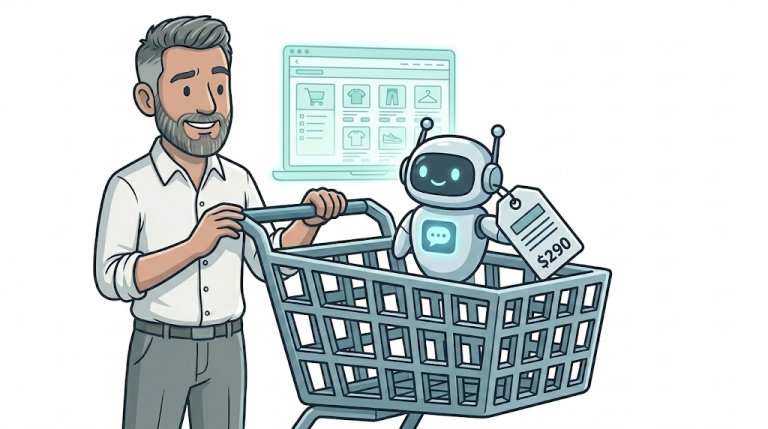
The same survey found that shoppers expect AI tools to influence something like 45% of their holiday spending this year, mostly for finding deals, comparing products, and deciding where to shop in the first place. That last point matters more than it sounds. AI is not only helping people pick between products on a site they have already found. It is increasingly helping them decide which businesses are even worth visiting.
The same research found that shoppers do not fully trust AI to make the final call. Only 8% say they would let an AI complete a purchase on its own, and 60% said they would rather use a tool built by the retailer itself than a generic AI assistant. That is a useful nuance. This is not shoppers handing decisions over to robots. It is shoppers using AI as an extra filter before they do their own final check, much like the “AI narrows it down, I verify before I buy” pattern in our earlier piece on AI shopping agents and whether your website is ready for them.
What this actually means for your business
Two things are happening at once, and both point the same way. Get visible, and get ready earlier than you normally would.
First, if a chunk of your potential customers are researching gifts, bookings or seasonal purchases in September and October, a website that is slow, out of date, or missing basic information (opening hours over Christmas, current stock, clear pricing) is losing quiet sales you will never see in your analytics. There is no dramatic drop-off to notice, just fewer people getting as far as your enquiry form.
Second, if AI tools are increasingly part of how people decide where to shop, the businesses that show up in those results tend to be the ones with clean, well-structured, genuinely informative websites. Those are the same qualities that also help with ordinary Google rankings. This is the generative engine optimisation idea we have written about before. Make your site easy for an AI system to understand and summarise accurately, not only easy for a person to read.
How to get your website ready for holiday shoppers
A short checklist before the rush properly starts:
- Check your website loads quickly and works properly on mobile. Slow, clunky sites lose people at the exact moment they are comparing you with someone else.
- Make sure your key seasonal information (hours, delivery cut-off dates, availability) is easy to find, and easy for a search engine or AI tool to lift out cleanly.
- Look at whether your product or service pages actually explain what you offer in plain language, not only in a photo gallery. AI Overviews and AI answers work from text, not images.
- If you run paid ads, consider whether your budget and messaging need to move earlier in the year, rather than concentrating on the traditional November and December window.
- If you have not touched your site in a while, this is a reasonable moment to get it properly reviewed rather than patched.
None of this requires a website overhaul overnight. It is mostly about making sure the site you already have is doing its job before the busiest weeks of the year arrive.
Frequently asked questions
When do most people actually start holiday shopping now?
According to Accenture’s 2026 survey, nearly 20% of shoppers had started before August, and 90% expect to have started before Black Friday. The early window has grown noticeably compared with last year.
Does AI affect where people shop for the holidays?
Not entirely, and not on its own. Shoppers are using AI tools to find deals, compare options, and narrow down where to shop. Most still want to make the final purchase decision themselves, and most trust a retailer’s own tools more than a generic AI assistant.
How do I get my small business website ready for Christmas?
Make sure the basics on your website are solid. That means speed, mobile usability, and clear written information about what you sell and when. That helps with normal search rankings and with how AI tools summarise your business, and it is the foundation everything else builds on.
If this has you wondering about your own site
You do not need to become an SEO or AI expert to get ready for the next few months. That is what we are here for. If reading this made you think you are honestly not sure how your website would hold up, GLC’s free website design offer is a genuinely no-obligation way to see what a properly built, fast, mobile-ready site could look like before the season gets busy. If you specifically want a check on how ready your current site is for AI and for search, our SEO and GEO audit covers exactly that. And if you are weighing up whether to start paid advertising earlier this year to catch the early shoppers, our Google and Meta ads service is worth a look too.
For more on how AI tools are already reshaping shopping decisions, see our earlier piece on AI shopping agents and whether your website is ready for them.
Contact Gareth at GLC Web Solutions if you want a straight answer on whether your website is ready for the shoppers who are already looking.