
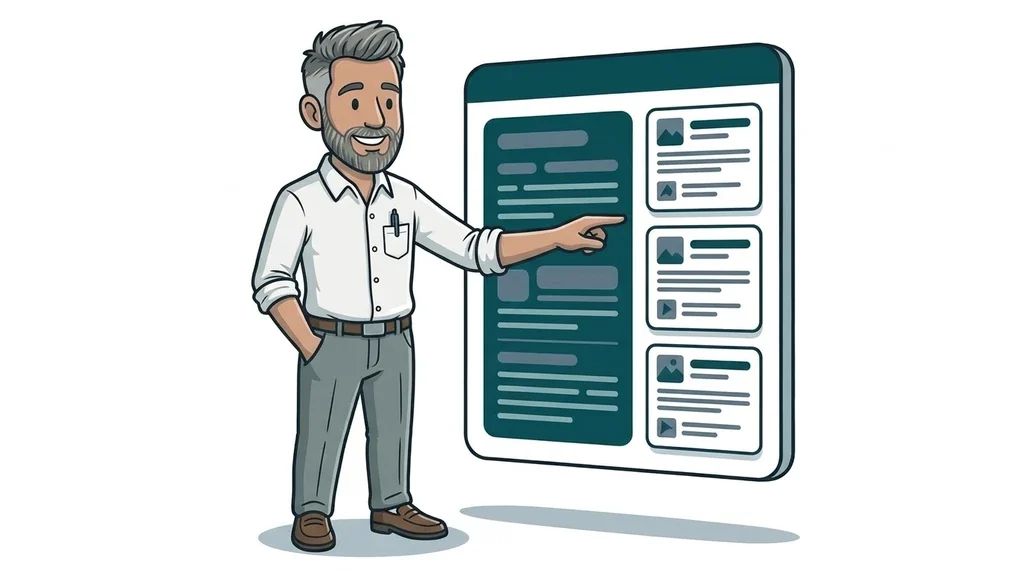
Around mid-November 2026 Google restored fully visible citation cards on desktop AI Overviews. Searchers now see three source cards by default, with no fade washing out the lower ones, and they no longer need to open the overview just to read who was cited. For a UK small business that means citation slots two and three are easier for people to notice again.
This is a display change on Google's results page, not a new ranking algorithm. Your pages still need to be indexed and worth citing. The good news is that when Google does cite you, more of those source cards stay readable.
What changed on the results page
Search Engine Roundtable reported the shift on 17 November 2026, after SEO researcher Brodie Clark spotted it. In recent months Google had been fading lower citation cards, and for a stretch on desktop the citation block was hard to see or missing. The new default looks different:
- Three citation cards appear beside or with the AI Overview by default.
- No fade on the second and third cards, so those domains stay readable.
- A "Show all" control sometimes expands the full source list (this button is still inconsistent).
Google has not published an official product blog post for this layout. Treat it as an observed rollout that could change again. The direction still matters: after a period of hiding sources, Google is making cited websites easier to see.
We covered Google's October push for more links inside AI Overviews. That update was about inline links and related articles. This November change is about the citation cards themselves being clear again.
Why the second and third cards matter
When an AI Overview answers the query on the spot, many people never scroll to classic blue links. The citation card is often the only branded path back to a real website.
If only the first card looked sharp and the rest faded, slots two and three were easy to ignore. Full visibility puts three domains in front of anyone who glances at the answer. That does not guarantee a click. It does raise the chance that a searcher notices your name, trust signal, or niche site even when you are not the top cited source.
Keep expectations honest:
- Visibility is not the same as traffic.
- Google still does not show AI Overview clicks as a separate metric in everyday Search Console reports the way classic organic clicks appear.
- You can still track impressions when your pages appear in AI answers via the Search Console AI Overview report.
So use this as a reason to care about earning a citation at all, not as a promise of a traffic spike.
What this means for your business
You do not need new markup or a special "AI Overview tag". Google's own guidance for AI features still starts with the same basics: the page must be indexed and eligible to show with a snippet in normal search before it can support an AI answer. If only your homepage is in the index, service pages cannot be cited. We wrote about that risk in only your homepage indexed on Google.
Practical steps for a busy owner this week:
- Pick the five pages customers actually need (quote, booking, prices, service area, FAQ). Make each one answer one clear job in plain English near the top.
- Check indexing in Search Console for those URLs. A page Google has not kept cannot be cited.
- Watch AI Overview impressions for those pages over the next few weeks. Note whether you appear as a supporting source more often after core and layout changes.
- Write for the answer and the click. Lead with a direct answer, then prove it with local detail, process, prices ranges, or photos an AI (and a human) can trust.
- Do not chase every layout tweak. Citation display has moved twice in about a month. Durable work beats redesigning the site every time Google restyles a card.
If you want a structured plan for generative search, our GEO step-by-step guide walks through the same foundations. Hands-on help sits under SEO and GEO services.
People still verify AI answers. After an AI recommendation, many search Google again or open the business site and the cited sources. We covered that behaviour in customers ask AI, then check your website. Clear citation cards make that second look easier.
A simple fact sheet
- When: mid-November 2026 (reported 17 November).
- What: desktop AI Overviews show three citation cards that are fully visible, without the old fade.
- Who noticed it first in public write-ups: Brodie Clark, then Search Engine Roundtable.
- Official Google blog: none published for this specific layout at the time of writing.
- What did not change: how Google chooses which pages to cite, or classic rankings overnight.
- Owner action: strengthen clear, indexed service pages and watch AI Overview impressions.
FAQ
Did Google announce this AI Overviews citation change officially?
Not as a dedicated Search Central blog post at the time of writing. The change was documented from live results by researchers and covered by Search Engine Roundtable. Layouts can roll out unevenly and reverse.
Will fully visible citations send me more website traffic?
Maybe a little more notice for second and third cited sites, but treat that as a hypothesis. Many searchers still leave with the AI answer alone. Focus on earning a citation with clear pages, then measure impressions before celebrating clicks.
How do I get my site cited in Google AI Overviews?
There is no separate submission form. Keep important pages indexed, write a direct answer to the queries you care about, and make the page the obvious official source for your business. That is the same work that helps classic SEO and GEO.
Should I redesign my site because citation cards look different?
No. This is Google's interface. Invest in content quality, indexation, and pages that complete a real customer task. Leave the card styling to Google.
What to do next
If AI Overviews already mention competitors and never you, start with indexing and one clear page per customer job. If your site looks fine but the answers feel thin, tighten the opening paragraphs so both people and AI systems can lift a clean summary.
When you want a second pair of eyes on whether your site is ready to be cited, take a look at our free website offer. It is a practical way to sense-check the pages that matter before the next Google layout tweak lands.
No comments yet